Recent articles


Published on 24 Apr 2026
Anglicare Southern Queensland (Anglicare) is proud to be partnering with Textile Recyclers Group, an Australian owned and operated textile recycling company to divert old uniforms from ending up in landfill.
Environmental impact of textile production
Textile production is a resource intensive industry. Unfortunately, this industry contributes to at least 8% of the world’s total carbon dioxide emissions.1 Textile production uses significant natural resources, including clean water, land, and raw materials.
Individuals and organisations who import, design, produce, sell, use and dispose of textile resources have a shared responsibility to reduce their environmental impact. In Australia, the key environmental regulations and frameworks include:
- The Product Stewardship Act 2011
- The Australian Industrial Chemicals Introduction Scheme
- The Environment Protection and Biodiversity Conservation Act 1999.
These laws and regulations guide how importation and manufacturing of textiles are managed to reduce their potential environmental impacts.
Anglicare’s commitment to environmental sustainability
Guided by the saying, ‘A sustainable future starts with the choices we make today,’ Anglicare’s committed to embedding sustainable practices to ensure our communities can thrive well into the future.
Our commitment to sustainability is one of the leading drivers of our strategic plan. It directs our strategic priorities as we continue to support the needs of Queenslanders well into the future. To create a more sustainable future, we’re consistently identifying opportunities to reduce our carbon footprint, improve waste management and make more sustainable choices across our organisation.
What is uniform recycling?
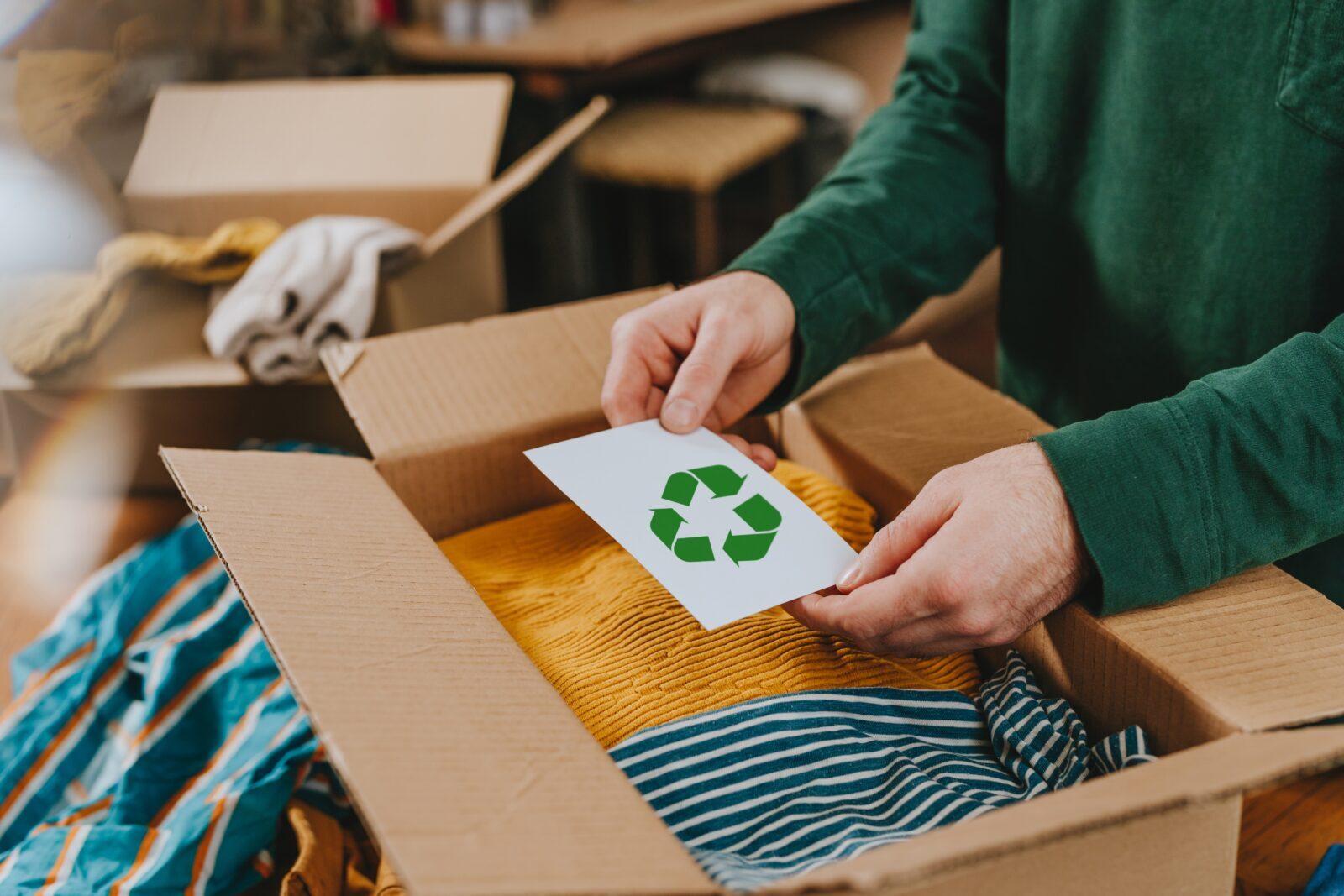
Uniform recycling programs help to keep old uniforms out of landfill by turning them into new materials, through pathways such as reuse, fibre recycling, or reforming into new materials. Some companies even de-brand and re-distribute garments to international second-hand clothing markets.
For Textile Recyclers Group, their recycling process involves cleaning and shredding upcycled uniforms into fibres which can be turned into materials such as padding (to be used, for instance, in furniture cushioning/upholstery), insulation or cleaning rags.
What are the benefits of uniform recycling?
There are vast environmental, economic, and social benefits of recycling uniforms.
Environmental benefits
As previously mentioned, textile recycling helps to keep fabrics out of landfill, which inadvertently keeps them out of water streams. It also:
- Saves resources – as the manufacturing of new clothing items requires water, energy and other resources.
- Reduces carbon emissions – producing new materials requires the consumption of greenhouse gas emissions. By reducing the need to manufacture new clothing resources, uniform recycling practices reduce carbon emissions.
Economic benefits
- Reduces waste management costs
- Lowers production costs of new goods
- Generates employment in the textile recycling industry.
Social benefits
- Promotes environmental sustainability awareness
- Enhances brand representation and social responsibility.
Who are the Textile Recyclers Group?
The Textile Recyclers Group have been leading textile recycling for close to a decade and work with over 200 companies across Australia. To date, the company has saved close to six million kilograms of textiles from entering landfill.
Their mission is to eliminate textile waste in waterways and landfill by transforming recycled materials into new products.
How to get your organisation involved in uniform recycling programs
If your business is going through a re-brand or is looking to give old uniforms a second life, textile recycling is a great solution. Not only is it an environmentally conscious decision but it can also contribute positively to the circular economy and your organisation’s corporate social responsibility.
Start by looking for the right partner to ensure your uniforms are accurately de-branded before being processed for recycling. It’s important to select a partner that will securely destruct your product. Then, begin planning and implementing convenient collection points/ methods for your staff to hand in their old uniforms to be collected and processed.
Sustainability at Anglicare
To learn more about Anglicare’s commitment to sustainability and other initiatives that we are involved with, please visit the Sustainability page on our website, here.
Resources
https://www.hhc.earth/knowledge-base/articles/the-environmental-impact-of-the-textile-sector