
Purpose of support within women’s homelessness programs
Women’s homelessness programs are designed to provide gender-specific support to women (and sometimes their children) who are experiencing, or are at risk of experiencing, homelessness.
Organisations, like Anglicare, help clients to re-build their self-worth and make more sustainable life choices. Support is tailored to help each client reach their potential and sustain their tenancies while developing life skills.
Leading reasons for women’s homelessness support
Domestic and family violence (DFV) is the leading cause of homelessness amongst women in Australia. Approximately 45% of all women and girls seeking the assistance of a housing and homelessness provider identified DFV as the leading cause for them needing support.1
In addition to DFV, some of the other biggest reasons/ causes that lead to women and children experiencing homelessness in Australia include:
- The housing crisis and affordability constraints
- Financial insecurity
- Lack of social and affordable housing
- Mental health challenges
- Substance abuse
- Unexpected life events.
DFV clients considered a national priority for homelessness support.
Due to DFV being the leading cause of homelessness to women and children, this cohort are considered a national homelessness priority, as per the National Housing and Homelessness Agreement and the National Plan to End Violence against Women and Children 2022-2032.2

Understanding the needs of women escaping DFV
The needs of women escaping DFV vary. Therefore, support should be tailored to their individual circumstances and meet them wherever they’re at on their journey.
Clients escaping DFV require immediate, safe and long-term accommodation or housing, and access to specialised, trauma-informed support.
In addition to safe accommodation and trauma-informed support, they might also require:
- Support with securing longer-term housing
- Financial assistance
- Safety planning and security
- Essential needs (i.e., food, vouchers, clothing and personal hygiene products)
- Other support services, for instance legal advice, counselling and mental health services, support with their children, and more.
Women’s homelessness services will identify the needs of each client by conducting a holistic and trauma-informed assessment, which will then inform their case management plan.
Crisis and safety response
Homelessness support for women escaping DFV typically involves crisis and safety response planning to prioritise immediate safety, confidentiality, and specialised care.
At Anglicare, when a woman presents to one of our homelessness services, we’ll conduct an initial safety and risk assessment. This helps us determine if the perpetrator is searching for her, if there are immediate dangers, if she has children, and if she requires other needs such as medical support.
As part of the crisis and safety response model, if it’s unsafe for a woman to return home, emergency accommodation will be arranged. At Anglicare, that might be at one of our shelters or other crisis accommodation options. In addition to the immediate safety and security offered through accommodation, the model also prioritises:
- Trauma-informed support through safety planning, emotional support, protection orders and filing of police reports, plus more
- Case management and goal planning to support women to apply for social housing or rental assistance, income support, legal advocacy, employment/ education pathways, support for children, help with their health and wellbeing, and more
- Coordination with other domestic violence services.
Additional support might be sought and provided to assist Aboriginal or Torres Strait Islander women, migrant women or refugees, LGBTQIA+ women, and other vulnerable groups of women including those with disabilities.
Trauma-informed and person-centred practice
Our women’s homelessness service is trauma-informed and prioritises:
- Person-centred practice and early intervention
- Collaboration and participation
- Empowerment and independence.
For many of the vulnerable women who come into our services after fleeing violent homes, trauma-informed and person-centred practice ensures that care is tailored to meet them wherever they’re at in their journey. Furthermore, respecting their individual backgrounds and circumstances.
Trauma-informed support is underpinned by the following principles.
- Safety – ensuring physical settings are safe and promote safe interactions
- Trustworthiness and transparency – organisational decisions build and maintain trust with clients
- Peer support – recognising peer support and mutual self-help for establishing safety, hope, trust and collaboration
- Collaboration and mutuality – partnership and equality between staff and clients
- Empowerment, voice and choice – allowing clients to share in decisions, choice, goal setting and advocacy
- Cultural, historical and gender issues – incorporating policies, protocols and processes that respond to the cultural and racial needs of clients.3
When delivering trauma-informed and person-centred practice, practitioners look for the signs and symptoms of trauma and trauma responses. Then, they should respond sensitively to the individual circumstances of the client to understand their experiences to engage effectively with the service.

Integrated and holistic support services
In women’s homelessness support, integrated and holistic support services take a client-centred approach to look at combining interventions that provide immediate and safe accommodation with coordinated access to other services. Support from other services might include help with their mental and physical health, financial assistance, employment opportunities, legal advice, and more.
By providing interconnected care, women’s homelessness services can help address the underlying causes of each person’s experience with homelessness and help them to make sustainable, long-term decisions for their future.
For women fleeing violent homes, integrated and holistic support typically combines safety planning and trauma-informed care (as mentioned above) with coordinated service delivery between domestic violence services, legal aid, police reporting, counselling, child protection, and other forms of mental health support.
Integrated and holistic support is important for helping this cohort to navigate multiple systems consistently. It ensures that multiple services and programs can coordinate referrals and share/ streamline processes more effectively.
Housing pathways and long-term stability
Typically, for women experiencing homelessness due to fleeing domestic and family violence, their housing pathways include immediate crisis accommodation, transitional housing and long-term housing outcomes.
Anglicare’s women’s homelessness services offer temporary accommodation options. This includes shelter and crisis accommodation. However, when providing accommodation support, we work with clients to address the barriers to housing and link them with relevant support services to help them secure sustainable housing.
Long-term stability is the ultimate goal of our services. It addresses the underlying causes of homelessness and provides women with the foundation for recovery, safety and rebuilding stability and independence. Long-term stability is permanent and aims to break the cycle of violence and homelessness.
Collaboration and partnerships
In women’s homelessness services, collaboration and partnership is imperative to creating cohesive and holistic support that meets the client-centred needs of each woman (and sometimes their children). It creates more effective service delivery and helps to address some of the root causes that lead to homelessness.
While no single service can meet all the complex needs involved in helping clients achieve their goals, they can effectively partner to support and advocate for their needs.
Culturally safe and inclusive practice
Domestic and family violence occurs in a range of different households and affects people from diverse cultures and communities.
There is a big overrepresentation of homelessness clients who identify as First Nations in Australia. Approximately, 29% of those seeking specialist homelessness support due to DFV are Aboriginal and/or Torres Strait Islander. Another overrepresented group are women from culturally and linguistically diverse backgrounds. Moreover, 18% of homelessness clients spoke a main language other than English at home.4
Therefore, women’s homelessness services assisting those affected by DFV need to be equipped to support their needs and address barriers in culturally safe and inclusive ways.
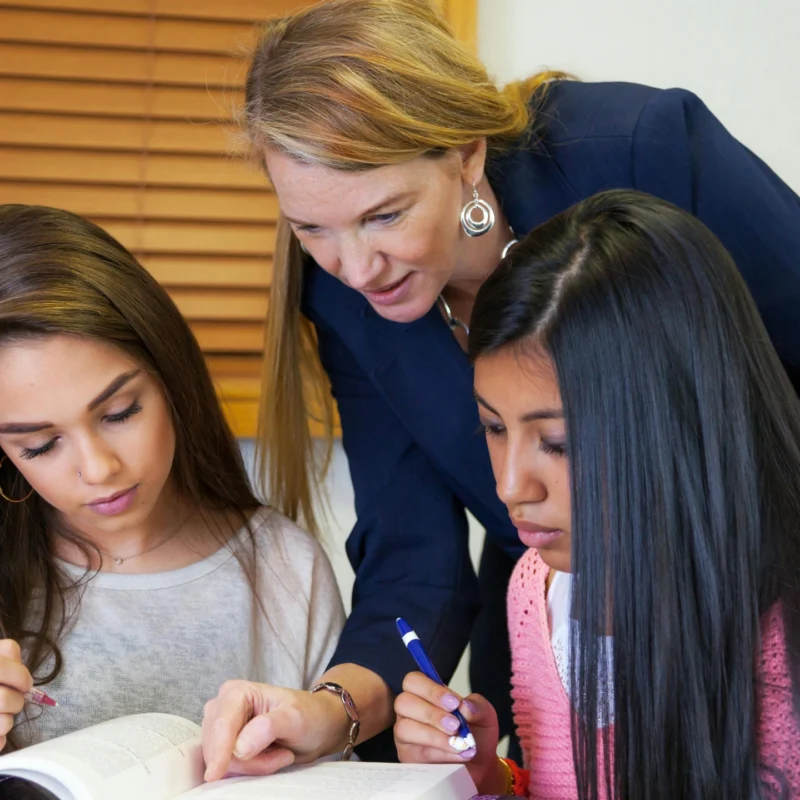
Some of the biggest barriers that affect people from culturally and linguistically diverse (CALD) backgrounds include:
- Limited CALD-specific information
- Language and communication barriers
- Distrust of authorities.5
To overcome these barriers and address the needs of women from culturally diverse backgrounds, services should be:
- Providing tailored, client-centred support
- Utilising staff who speak a range of languages or providing language interpretation services
- Training staff on cultural competency
- Building trust through community engagement to ensure women feel safe and not judged for seeking support
- Co-designing services with clients of CALD backgrounds.
Monitoring and evaluation
To monitor and assess the effectiveness of their programs, women’s homelessness services implore a range of evaluation tools. In a previous blog, How effective are homelessness services, we explored some of these tools, including:
- Measuring housing and homelessness through the number or percentage of clients moving into stable housing after being supported, understanding retention rates, determining the length of time between initial point of support to permanent housing etc.
- Client experience and satisfaction surveys or interviews.
- Determining wrap-around support success through employment or training/education rates, income, wellbeing, connection, etc.
Challenges and barriers
There are numerous challenges and barriers that continue to impact women’s homelessness services, particularly those helping women escaping DFV.
These challenges and barriers include a shortage of safe, affordable and long-term housing, underfunding for housing and homelessness, and DFV services, lack of support for CALD communities, geographic constraints, and large-scale systemic gaps.
Continuous improvement and innovation
Domestic and family violence is a national crisis and unfortunately the number of women and children seeking the support of homelessness services because of it, each year, is increasing.
According to Homelessness Australia’s CEO, Kate Colvin, significant investment in homelessness services is critical in helping women to escape violence and not being stuck in unsafe homes. Across Australia, almost one quarter of people experiencing DFV who sort homelessness services missed out on short term accommodation and almost 50% missed out on transitional housing. More concerningly, over 70% of those needing long-term housing missed out.6
Government and policy makers need to invest in more programs and services that can provide accommodation and housing solutions. Boosting investment in frontline homelessness and DFV services, will help provide clients with a dedicated practitioner and necessary accommodation that can support them in their recovery and to create sustainable long-term plans.
In an earlier blog, we also explored some other strategies that governments and service providers can implement to increase accessible, available and affordable housing. These can also be applied to homelessness services which provide DFV specific support to women and children escaping violence.
- Investment in more screening programs identifying at-risk families
- Providing increased assistance to First Nations, CALD and LGBTQIA+ individuals as well as other vulnerable groups including those who identify with a disability
- Improving connection and partnerships between services
- Improving and increasing rural support for clients facing geographical constraints.
Conclusion
At Anglicare, we’re proud to offer a range of housing and homelessness services to women including adult women and young women with children. We also provide support and assistance to women in contact with the criminal justice system who are connecting with housing and support after incarceration, as well as providing tenancy support for people completing court-referred drug and alcohol treatment.
To learn more about our women’s homelessness services, please click here.
Whilst our women’s homelessness services provide trauma-informed care for women escaping domestic and family violence, we also provide a range of domestic and family violence programs. To learn more about these programs, please click here.
Resources
- https://streetsmartaustralia.org/shining-a-light-on-women-facing-homelessness/
- https://www.aihw.gov.au/family-domestic-and-sexual-violence/responses-and-outcomes/housing
- https://aifs.gov.au/resources/practice-guides/trauma-informed-practice-family-mental-health-support-services
- https://www.aihw.gov.au/family-domestic-and-sexual-violence/responses-and-outcomes/housing
- https://www.aihw.gov.au/family-domestic-and-sexual-violence/population-groups/cald
- https://homelessnessaustralia.org.au/domestic-violence-demands-investment-in-homelessness-services/