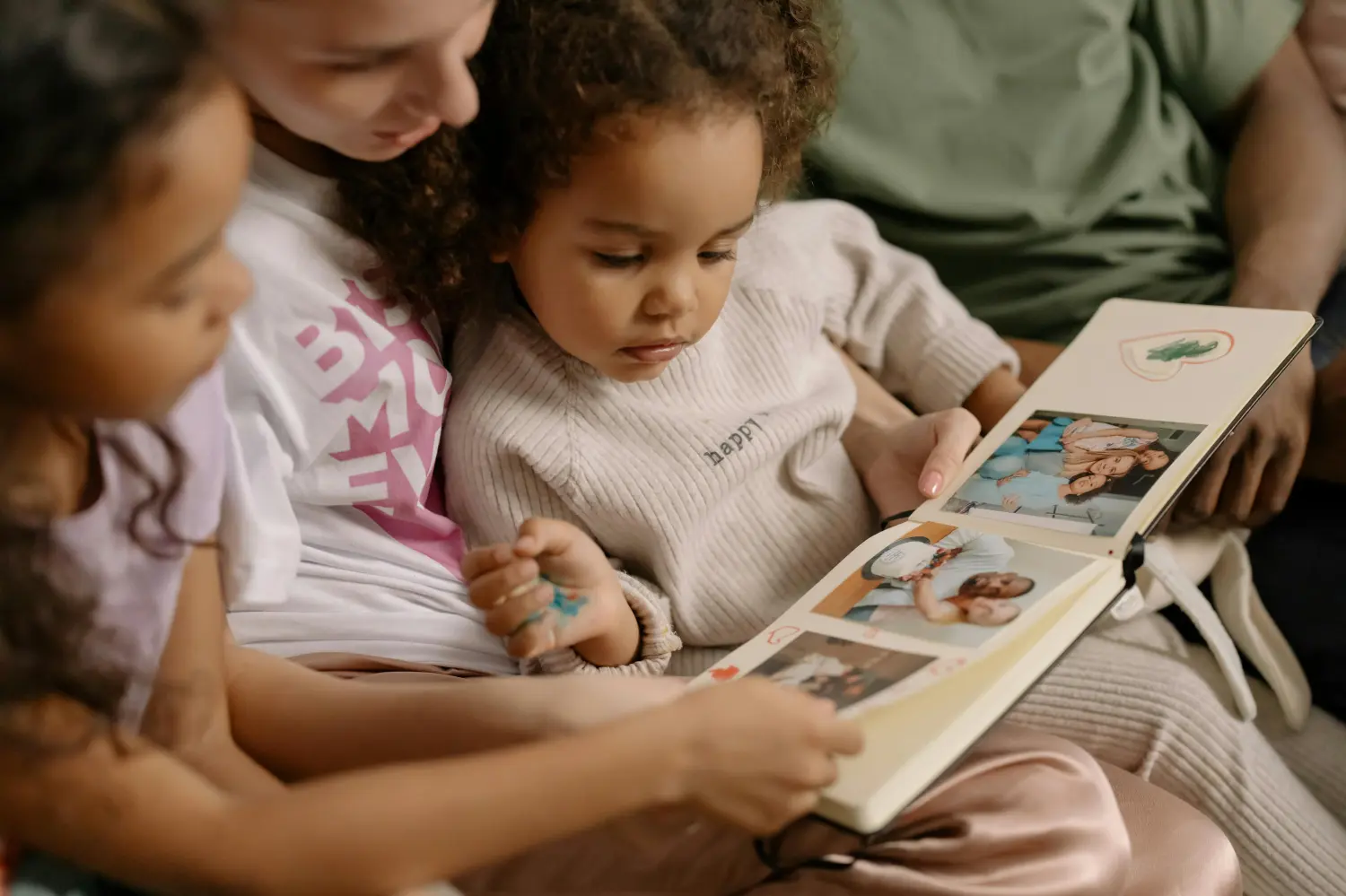
Kinship care services, like foster care services, support the emotional, training, and respite needs of kinship carers. In this blog, we’ll explain how they do this while ensuring good practice with kin carers, areas for improvement, and more.
Purpose of kinship care services
Kinship care services provide safe and nurturing environments for children who can’t live at home with their parents and instead live with someone they already know and trust.
When children cannot stay with their parents, the child placement principle prioritises kinship placement (where safe and feasible to do so). Kinship care is a great care option as it places children with people who they are probably already familiar with and it can reduce the emotional impact of being away from their families, all while maintaining a connection to their roots.
Like foster care, the goal of kinship care is to reunite children with their birth parents, when it’s possible to do so.
Kinship (or kin) carers can include family members, close friends, or people within a community who the child already knows or has a relationship with the child. Examples of who can be a kin carer include:
- Grandparents
- Aunts, uncles, or adult siblings
- Cousins or great-aunts/ uncles
- Close family friends
- Members of an Aboriginal or Torres Strait Islander community or language group linked to the child.
Learn more about kinship care here.
Kinship care services in Queensland
In Queensland, support for kin carers is typically provided by agencies such as Anglicare Southern Queensland. These agencies work with kinship carers, children and young people, and their families to provide children and young people with care until reunification can be achieved.
The Queensland Government’s Department of Child Safety (often referred to as The Department) oversees children’s safety, belonging and wellbeing. In the context of foster care, they partner with agencies, like Anglicare Southern Queensland, to provide comprehensive support and training to carers.
Kinship care services also work with other advocacy and support services to provide specialist care to children and young people, and their carers. This may also include cultural support.
Emotional support for kin carers
While caring for another person can be rewarding, it can sometimes create emotional exhaustion. That’s why it’s so important for carers, especially kinship carers, to understand what emotional support is available to them and to access it.
Through agencies, kinship carers are allocated designated case workers/ practitioners who check in with them and provide practical and emotional assistance. These professionals provide safe spaces for carers to debrief about their experiences, frustrations and emotions, while listening to, advocating for, and offering advice and solutions to address their challenges.
Other forms of emotional support available to carers include:
- Carer support group networks – comprised of other foster and kinship carers who can share experiences and challenges with one another
- 24/7 crisis support – on call services to help with emergency situations
- Respite care – available to help with emotional burnout
- Advocacy services – to help carers feel listened to and empowered.

Counselling support for kinship carers
Foster and kinship care support services usually work with a range of referral partners and providers who provide counselling support to carers requiring emotional assistance. If you’re a kinship carer and are interested in learning more about the counselling support services that you can access, we recommend reaching out to your case worker or practitioner for more information.
Alternatively, there are a range of counselling support services available online, over the phone, and in person for a range of carers. We explore these options in our recent blog ‘What mental health or counselling supports are available to you as a carer?’
Training and skill development
In Queensland, foster and kinship carers receive slightly different training and skills development opportunities to work with children in care. Kinship carers do have opportunities to access the same type of training as foster carers. However, some of their training may not be mandatory, and their training can be customised according to the children they are caring for.
Some of the training and skills development support that kin carers receive in Queensland cover trauma, safety, child development, mental health and cultural needs. This is typically provided by a foster and kinship care support agency. They may be delivered online, in workshops or personalised (one-to-one).
To learn more about how kinship carers are supported by Anglicare Southern Queensland, including training and skills development, view our Kinship Care Model booklet here.
Respite support for kinship carers
Kinship care support services, like Anglicare, provide respite care options to support carers and the children in their care. Respite care is designed to help ensure that children and young people can take time to be cared for while their permanent carers take time out for themselves.
We explore how respite is beneficial to carers. Essentially, respite care is crucial for maintaining care placements as it:
- reduces carer burnout
- improves the mental and physical health of kinship carers
- improves ‘me’ time and family time for carers.
- Respite care also benefits children and young people as it allows them to:
- build trust and connection with other adults
- develop healthy attachments and reduce fears
- widen their support network
- improve their social skills
- build resilience
- adjust to new transitions and experiences
- be exposed to new hobbies and routines.

Collaboration and case management
There are several stakeholders involved in the case management of kinship carers and their foster children. The primary contacts involved include:
- Their case worker/ practitioner from their support agency
- A Child Safety Officer (CSO)
- A Community Visitor (CVO)
- A Child Advocate Legal Officer
- People involved in the young person’s safety or support network.1
Collaboration amongst these groups is important in the case management of the kinship placement as it helps with developing child-centred case plans, providing respite, connecting children with culturally appropriate support, providing trauma-informed care, partnership and advocacy, and more.
Mentoring and evaluation of support effectiveness
Mentoring in the context of kinship care support services typically occurs amongst case works/ practitioners, support agencies (frontline staff) and with kin carers.
To equip frontline staff, agencies lead and grow practice through connection, collaboration, research and innovation. This is referred to as practice development. Practice development teams help frontline staff to mentor kin carers through:
- The implementation of training and onboarding
- Ongoing development and skill building opportunities
- Implementing innovative support
- Ongoing assessment (home visits, standards of care procedures, etc.)
- And more.
To evaluate support effectiveness, agencies typically measure their success through carer feedback, tracking child wellbeing outcomes and evaluating data and metrics. Agencies, like Anglicare, should also have quality assurance teams to review compliance of services and the quality of support that kin carers and children receive.
Challenges and systemic barriers
Across the board, in Queensland, there are some ongoing challenges and systemic barriers that impact kin carers and their capacity to provide quality care to children and young people. These include:
- Lack of culturally appropriate support to help carers looking after Aboriginal and Torres Strait Islander children
- Legal complexities regarding decision making for children in care
- High turnover of primary contacts across agencies and government stakeholders which can create inconsistencies in support and hinder relationships
- Challenging family dynamics and navigating strained relationships with the child’s birth parents
- Lack of trauma-informed practices
- Lack of data relating to the views and participation of children and young people.

Good practice and innovations
For kinship care support services, good practice incorporates the views and voices of kinship carers as well as children and young people. Services should be adapting their service approach to support the individual needs of those they support.
Additionally, across the board, agencies should be adhering to the child placement principle which typically prioritises a kin-first approach before other placement options are considered for children and young people.
Good practice should also consider or enhance trauma-informed practices, be culturally informative and build on the existing strengths and resilience of kinship carers.
Continuous improvement and policy recommendations
There are vast opportunities for continuous improvement and policy recommendations for kinship carers and kinship care support in Queensland. We explain some of the biggest opportunities below.
Opportunities for continuous improvement
- Financial assistance – increased financial government support for kinship carers to meet the needs of caring for children in care especially during the cost-of-living crisis.
- Trauma-informed practice – increasing training and knowledge building support for carers and agencies who work with children and young people.
- Legal support – increasing knowledge and support for kinship carers to know their rights when caring for children.
- Culturally appropriate support – including training for non-Indigenous kinship carers caring for Indigenous family members.
Policy recommendations
Across the sector, there are several ways that policy can be improved to create better outcomes for kin carers, the children in their care, and children’s birth parents involved in the kinship care system. In Queensland, more can be achieved with greater partnership between agencies and the Department of Child Safety. Furthermore, increasing collaboration which can assist in improving information sharing in a timely and tailored manner to meet the unique circumstances of each kin placement.
Another recommendation would be to work with relevant services to tighten their models of cohesive practice, which again could assist in improving information sharing practices. Therefore, helping to link children and kin families with specialist and wrap-around support in more timely and effective ways.
Other areas where policy can help improve the experiences of those involved in the kinship care system include:
- Strengthening collaboration and the voices of children’s birth families to help involve them in identifying suitable kin arrangements; and
- Increasing prioritisation of the child’s voice. Read more about hearing children’s voices in care here.
Conclusion
Kinship care services do a lot to support the emotional, training and respite needs of kinship carers. There are numerous stakeholders involved in the kinship care system and because of this, there’s opportunities to improve these supports to create more cohesive and effective practices that prioritise tailored care approaches for kin carers, children and young people, and their birth parents. Increasing awareness and lobbying to policy makers are some great first steps to being able to create change.